

Más tecnología para planificar mejor nuestras obras
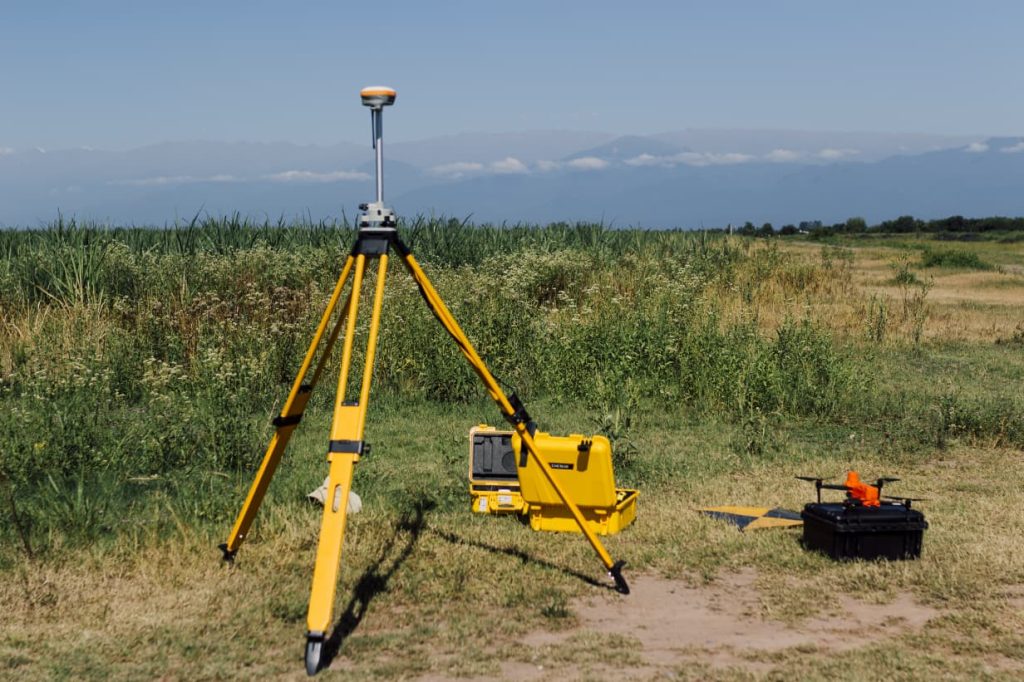
La Dirección Provincial de Vialidad incorporó nuevo equipamiento de última generación para fortalecer las tareas de relevamiento, estudio y planificación de proyectos viales en toda la provincia.

Why Low Deposit Casinos Are Growing in New Zealand According to 5DollarDepositCasinos

New Zealand’s online gambling market has undergone a quiet but significant transformation over the past several years. Where once players were expected to commit substantial sums before experiencing a casino platform, a growing number of operators are now accepting deposits as low as five New Zealand dollars. This shift is not accidental, nor is it simply a marketing gimmick. It reflects a convergence of regulatory pressures, changing player demographics, technological infrastructure improvements, and a broader cultural recalibration around how New Zealanders engage with online entertainment. Understanding why low deposit casinos have gained such traction in New Zealand requires looking beyond the surface appeal of small minimums and examining the structural forces that have made this model not just viable, but increasingly dominant in the local market.

The Regulatory Landscape and Its Influence on Deposit Thresholds

New Zealand’s gambling framework is governed primarily by the Gambling Act 2003, which established a tiered licensing structure and drew a firm distinction between offshore and domestic operators. Under this legislation, the New Zealand Lotteries Commission and the TAB operate under domestic licenses, while online casinos offering table games and slots to New Zealand residents are technically unlicensed within the country’s borders. This legal grey area has had a paradoxical effect on the market: because offshore operators are not subject to the same direct regulatory oversight as domestic entities, they have been free to compete aggressively on product features, including deposit flexibility.

The Department of Internal Affairs, which administers gambling regulation in New Zealand, has focused its enforcement efforts primarily on preventing unlicensed operators from actively targeting New Zealand residents through advertising rather than on restricting access at the payment processing level. This means that for much of the 2010s and into the 2020s, players could freely access offshore platforms, and those platforms had strong competitive incentives to lower barriers to entry. A five-dollar minimum deposit is one of the most effective barriers-to-entry reductions an operator can offer, and in an unregulated competitive environment, these thresholds dropped steadily.

The Gambling (Harm Prevention and Minimisation) Amendment Act discussions that have been ongoing since approximately 2021 have also played a role. As New Zealand’s government has signaled a potential move toward a regulated offshore licensing framework — similar to models adopted in the United Kingdom, Malta, and parts of Australia — operators have been positioning themselves as responsible, accessible, and player-friendly in anticipation of stricter scrutiny. Low deposit requirements, counterintuitively, align with responsible gambling principles when they are paired with robust deposit limit tools, because they allow players to engage with minimal financial risk. Operators entering a potentially regulated New Zealand market have an incentive to demonstrate that low minimums do not inherently lead to higher harm rates.

It is also worth noting that New Zealand’s Anti-Money Laundering and Countering Financing of Terrorism Act 2009, as amended in 2017, placed new obligations on financial institutions regarding gambling-related transactions. This led some banks to introduce friction into gambling deposits, making high-value single transactions more difficult to process without triggering review. Low deposit thresholds sidestep some of this friction by keeping individual transaction values beneath the thresholds that attract heightened scrutiny, making the payment experience smoother for both operators and players.

Player Demographics and the Economics of Accessibility

New Zealand has a population of just over five million people, which places significant constraints on the addressable market for any online gambling operator. Unlike larger markets such as the United Kingdom, where even a niche product can find hundreds of thousands of users, New Zealand operators and the offshore platforms targeting New Zealand players must work harder to convert and retain a smaller pool of potential customers. Low deposit thresholds are, in this context, a volume strategy: by reducing the financial commitment required to start playing, operators expand the proportion of the population willing to try their platform.

The demographic most significantly affected by this dynamic is the 25 to 40 age bracket, which represents the core of New Zealand’s online gambling growth. This group came of age during the smartphone era, has high expectations for digital product quality, and is accustomed to freemium and low-barrier access models from streaming services, gaming platforms, and app ecosystems. Asking a 28-year-old New Zealander to deposit one hundred dollars before they can test a casino platform is a significant ask in the context of a digital culture built around trial-first, commit-later models. A five-dollar deposit fits naturally into this expectation framework.

Wage growth in New Zealand has not kept pace with housing costs and general cost-of-living increases, particularly in Auckland and Wellington. Reserve Bank of New Zealand data from the early 2020s showed that household discretionary spending was under pressure from inflation and rising mortgage rates. In this environment, entertainment budgets are scrutinized more carefully, and low deposit casinos offer a way to access gambling entertainment without committing a meaningful portion of a weekly discretionary budget. This is not a trivial point: it speaks to why the five-dollar deposit model has found resonance beyond just casual or first-time players and has become a preferred model even for experienced gamblers who want to test new platforms before transferring larger sums.

Research compiled by platforms tracking New Zealand player behavior, including data referenced by 5DollarDepositCasinos, indicates that player retention rates at low-minimum-deposit casinos in New Zealand are comparable to or higher than those at platforms with higher thresholds, challenging the assumption that low deposits attract only low-value, transient players. When players are not required to over-commit financially at the point of entry, they are more likely to return and deposit incrementally over time, producing lifetime value figures that compete effectively with those generated by high-entry-threshold platforms.

Payment Technology and the Infrastructure Behind Low Minimums

The practical ability of casinos to accept five-dollar deposits is not simply a matter of policy choice — it depends on payment infrastructure that can process small transactions cost-effectively. For much of the early online gambling era, payment processing fees made very small deposits economically unviable. A transaction fee of two to three percent on a one-hundred-dollar deposit is negligible; on a five-dollar deposit, that same percentage fee represents a meaningful cost that erodes the operator’s margin before the player has even placed a bet.

The expansion of e-wallet services into the New Zealand market changed this calculus substantially. POLi, which allows direct bank transfers without card processing fees, became widely used in New Zealand during the 2010s and remains relevant today. Skrill and Neteller, both owned by Paysafe Group, established strong user bases among New Zealand online gamblers and offered processing cost structures that made small deposits economically viable. More recently, the growth of cryptocurrency payment options — particularly Bitcoin and, to a lesser extent, Ethereum and Litecoin — has further reduced per-transaction costs for small deposits, since blockchain transactions do not involve the same intermediary fee structures as card networks.

New Zealand’s banking sector has also adapted. While some major banks initially resisted or complicated gambling-related transactions, the market pressure from players using alternative payment methods has led to a more pragmatic accommodation. ASB, ANZ, and Westpac have all, at various points, updated their online banking platforms in ways that make small, recurring transfers to gambling platforms more straightforward, even if they have not explicitly endorsed gambling-related use cases. The result is a payment ecosystem in which a five-dollar deposit can be initiated, processed, and credited to a player’s casino account within minutes, removing the logistical friction that once made low-minimum deposits operationally impractical.

The introduction of open banking frameworks globally, which New Zealand has been moving toward through the Consumer Data Right legislation discussions of the early 2020s, is expected to further reduce payment processing costs and latency. When open banking is fully implemented, the cost of processing a five-dollar deposit will be even lower than it is today, meaning the economic case for low-minimum deposit casinos will strengthen further over the coming years. Operators who have already built their platforms around the low-deposit model will be well-positioned to benefit from this infrastructure evolution.

Mobile payment adoption has also been a significant factor. New Zealand has one of the highest smartphone penetration rates in the Asia-Pacific region, with Statistics New Zealand data indicating that the vast majority of adults access the internet primarily through mobile devices. Mobile-first casino platforms, which have become the norm rather than the exception, are optimized for quick, small transactions that fit naturally into a mobile usage pattern. Depositing five dollars while commuting or during a lunch break is a behavior that aligns with how New Zealanders already use their phones for small financial transactions through apps like Afterpay, Sharesies, and various banking applications.

Competitive Dynamics Among Operators and the Role of Bonus Structures

The growth of low deposit casinos in New Zealand cannot be fully understood without examining the competitive dynamics among operators targeting the market. Because New Zealand’s offshore gambling market is not formally regulated, there is no licensing authority setting minimum deposit floors or standardizing bonus structures. This creates a competitive environment in which operators must differentiate themselves through product features, and deposit thresholds have become a primary point of competition.

When one operator reduces its minimum deposit from twenty dollars to ten dollars, competitors face pressure to match or undercut that threshold. This ratchet effect has driven minimums steadily downward over approximately a decade. The five-dollar threshold has emerged as something of a natural floor, not because of regulation but because of the payment processing economics described earlier and because below this level, the bonus structures that operators use to attract players become difficult to structure meaningfully. A bonus on a two-dollar deposit, for example, would be so small as to be effectively meaningless as a marketing tool.

Bonus structures themselves have evolved in ways that reinforce the low-deposit model. The no-deposit bonus, which grants players a small amount of free credit or free spins without requiring any deposit, became popular in New Zealand during the mid-2010s and effectively trained players to expect low-risk entry points. When no-deposit bonuses are paired with matched deposit bonuses on first deposits, the effective cost to a player of testing a new platform drops to near zero. A player who receives a one-hundred-percent match bonus on a five-dollar deposit is, in effect, playing with ten dollars of value while committing only five of their own money. This structure has proven highly effective at converting curious browsers into active players.

The wagering requirements attached to these bonuses have also been a point of competitive differentiation. Early bonus structures in the New Zealand market often carried wagering requirements of forty to sixty times the bonus amount, which made it effectively impossible for players to withdraw bonus-derived winnings. As the market has matured and players have become more sophisticated — partly through the educational work done by comparison platforms that analyze and explain bonus terms — operators have been forced to reduce wagering requirements to remain competitive. Lower wagering requirements make low-deposit bonuses more genuinely valuable, further reinforcing the appeal of the five-dollar deposit model.

Loyalty programs have adapted similarly. Rather than requiring players to reach high spending thresholds before earning meaningful rewards, casinos targeting New Zealand players have introduced tiered loyalty structures where even small, regular deposits accumulate points and unlock benefits. This model encourages frequent small deposits rather than infrequent large ones, which aligns perfectly with the low-deposit casino framework and creates stickier player relationships than the high-deposit, high-churn model that characterized earlier online casino operations.

The aggregation of player reviews and platform comparisons has also accelerated competitive pressure on deposit thresholds. When New Zealand players can easily compare minimum deposit requirements across dozens of platforms through dedicated review sites and community forums, operators with higher minimums face a clear visibility disadvantage. This transparency has been one of the most powerful forces driving deposit thresholds downward, because the cost of switching between platforms is low and the information required to make that switch is readily available.

In summary, the growth of low deposit casinos in New Zealand is the product of intersecting forces that have been building for more than a decade. Regulatory ambiguity created space for offshore operators to compete aggressively on product features. Demographic shifts brought a generation of players accustomed to low-barrier digital access into the gambling market. Payment technology evolution made small transactions economically viable for operators. And competitive dynamics among platforms drove deposit thresholds to levels that would have seemed implausibly low to observers of the market in the early 2000s. The five-dollar deposit has become a structural feature of the New Zealand online gambling landscape, not a temporary promotional tactic, and the forces sustaining it show no signs of reversing. As New Zealand moves toward a more formally regulated online gambling framework, the question is not whether low-deposit casinos will remain relevant, but how regulation will accommodate and potentially standardize a model that the market has already validated through years of player behavior and operator adaptation.

Se trata de un drone RTK de alta precisión, un receptor GNSS CHC i73+ y una controladora de campo HCE600, herramientas que permiten obtener datos topográficos precisos, realizar levantamientos en menor tiempo y mejorar la calidad técnica de cada proyecto El Ing. Pablo Corbalán, Jefe del Departamento de Estudios y Proyectos de la DPV, nos explica que esta tecnología optimiza el trabajo en territorio, mejora la toma de decisiones y aporta mayor eficiencia y seguridad en la etapa de planificación de obras. Con más tecnología, seguimos fortaleciendo el trabajo técnico y construyendo una red vial más moderna, segura y eficiente para Tucumán.